
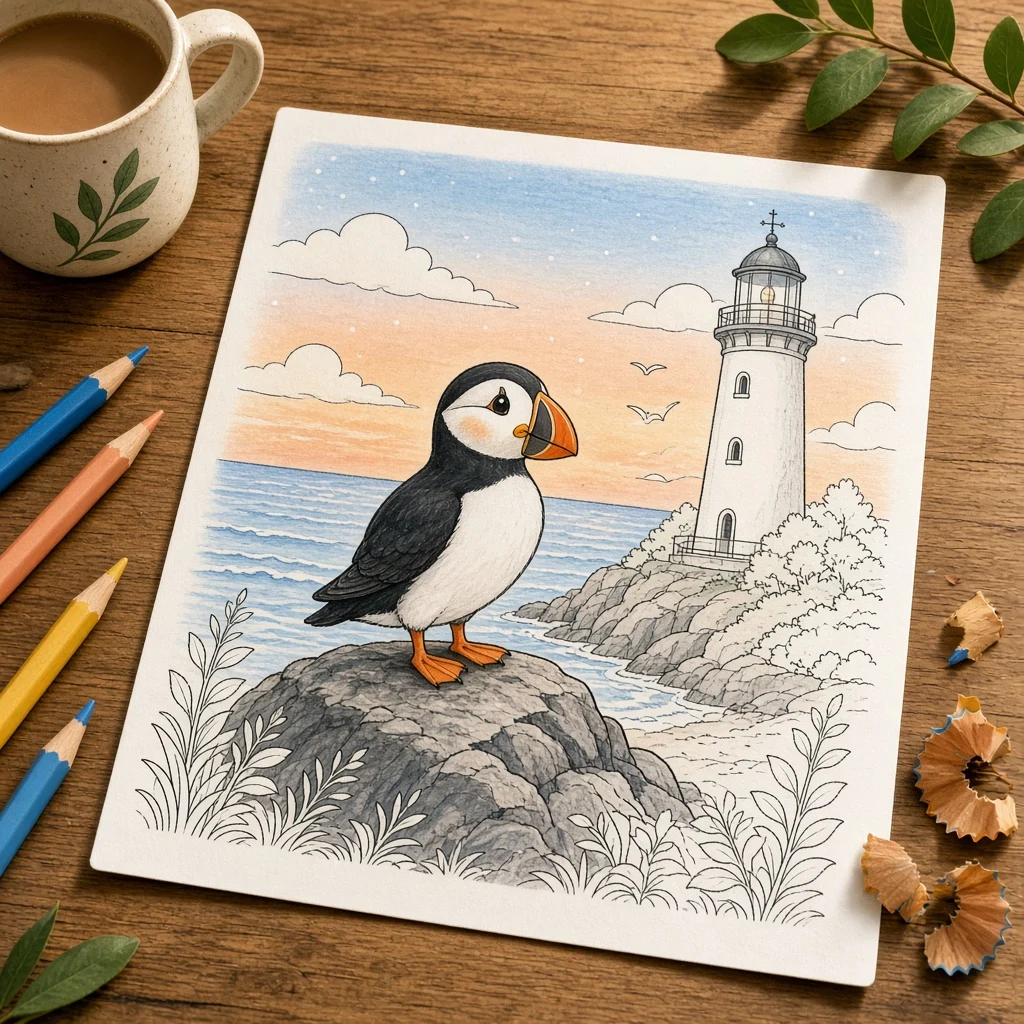
You have finished coloring a sweet little character, and it looks great. Then you notice the big empty space around it. Should you leave it white, fill it in, or add a pattern? The background is often the last thing people think about, but it can change the whole feel of a page.
This guide covers how to color backgrounds on coloring pages in simple, practical ways. You will find easy ideas for beginners, tips for keeping your main character the star, and a few methods that work with colored pencils, markers and crayons. None of them need special supplies or advanced skills.
Why the Background Matters
A background does two jobs. First, it sets the mood. A soft blue sky feels calm, warm peach feels cozy, and deep navy feels like nighttime. Second, it helps your main subject stand out. When the area behind a character is a little quieter or a little darker, the eye goes straight to the character.
That does not mean every page needs a full background. Sometimes plain white paper is the right choice. The trick is to decide on purpose instead of leaving it as an afterthought.
Step 1: Color the Main Subject First
Most people find it easiest to color the character or focal point before the background. Once your animal, house or vehicle is done, you can see which colors it uses and choose a background that works with them rather than against them.
If you want to plan ahead, test a few colors on a scrap of the same paper. It only takes a minute and saves you from filling a large area with a shade you do not like. Our post on choosing a simple color palette has more help with this.
Step 2: Pick a Background Color That Supports the Subject
A few easy rules of thumb help a lot:
- Light subject, darker background. A white bunny or pale cloud pops against a soft blue, green or lavender.
- Dark subject, lighter background. A brown bear or black cat looks clear against cream, pale yellow or light sky blue.
- Use a color that is not already all over the subject. If your fox is orange, an orange background will make it blend in. Try a cool blue or green instead.
- Repeat a small accent. Picking up one color from the character, like the pink of a scarf, and using a paler version behind it makes the page feel connected.
Step 3: Choose a Simple Background Style
You do not need a detailed landscape. These simple styles all look finished and are easy to manage.
Soft gradient
Start with a slightly darker shade at the top or edges of the page and fade to lighter near the subject. With colored pencils, press a little harder at the dark end and lighten your pressure as you move across. This looks especially nice for skies, water and nighttime scenes.
Halo or glow
Color a light ring of color right around the character, then let it fade out into white paper. It takes far less time than filling the whole page and makes the subject look like it is glowing. This works well with warm yellow for lantern and candle scenes.
Simple patterns
Fill the space with small dots, stripes, stars, hearts or tiny flowers. Keep the pattern in one or two light colors so it stays in the background. Patterns are a fun way for kids to finish a page without needing to blend.
Even, flat color
A smooth, even layer of one pale color can look clean and modern. Use small circles or overlapping strokes all going the same way, and build up two or three light layers rather than one heavy one.
Step 4: Color the Scene Details
Many tintlet pages already include scenery like shelves, windows, grass or clouds. For these, try a few easy approaches:
- Make far-away things paler. Hills, trees and buildings in the distance look better in lighter, slightly bluer or grayer colors.
- Keep the busiest details near the subject. Items right next to the character can be brighter, while corners and edges stay softer.
- Use fewer colors in the background. Two or three shades are usually enough for a calm, tidy look.
- Add shadows on the ground. A small gray or darker patch under a character or object helps it sit in the scene instead of floating.
Tips for Different Coloring Tools
Colored pencils
Large areas can look streaky with pencils. Keep a sharp point, use light pressure and work in small circular motions or in strokes that all go the same direction. Several light layers look smoother than one hard layer. If layering is new to you, see our guide to colored pencil layering for beginners.
Markers
Markers fill big spaces quickly, but they can leave streaks. Work in small sections and keep the edge wet as you go. Our post on coloring with markers without streaks or bleed-through has more detail, including paper tips.
Crayons
Crayons are great for kids and for soft, textured backgrounds. Peel the paper off an old crayon and rub its side gently across the page for a quick, even wash of color. You can also lay a textured surface under the paper for a fun rubbing effect.
Background Ideas from tintlet Books
Here are a few tintlet coloring books with scenes that are great for background practice:
- Walrus Winter Lantern Festival, for glowing lantern halos against a dark winter sky.
- Puffin Lighthouse Pantry, for seaside skies and soft ocean gradients.
- Highland Cow Mitten Meadow, for meadows, hills and pale distant scenery.
- Tarsier Moonbeam Photo Studio, for moonlit night backgrounds.
- Peacock Mosaic Fountain, for practicing patterned and tiled backgrounds.
For more scenes, browse the Nature category or try the Patterns category if you enjoy filling space with repeating designs.
FAQ
Should I color the background before or after the character?
Most people find it easier to color the character first. That way you can pick background colors that suit it, and you are less likely to smudge dark background color onto a light subject.
Is it okay to leave the background white?
Yes. White space can look clean and fresh, especially on busy pages. If the character feels a little lost, a simple halo of light color around it is a quick middle ground.
How do I keep backgrounds from looking patchy?
Use light pressure, build up a few thin layers and keep your strokes going in the same direction. Working in small sections helps, too, especially with markers.
Can I try different backgrounds on the same page?
Yes. tintlet PDFs can be printed again for personal use by you or your family, so you can color the same page with a day sky, a night sky or a pattern and compare.
Give Your Next Page a Finished Look
Choose one simple style, like a soft gradient or a light pattern, and try it on your next page. It only takes a few extra minutes and can make a cute character look like part of a real little world. When you are ready for something new to color, browse the full tintlet coloring book collection and find a scene you would love to bring to life.