
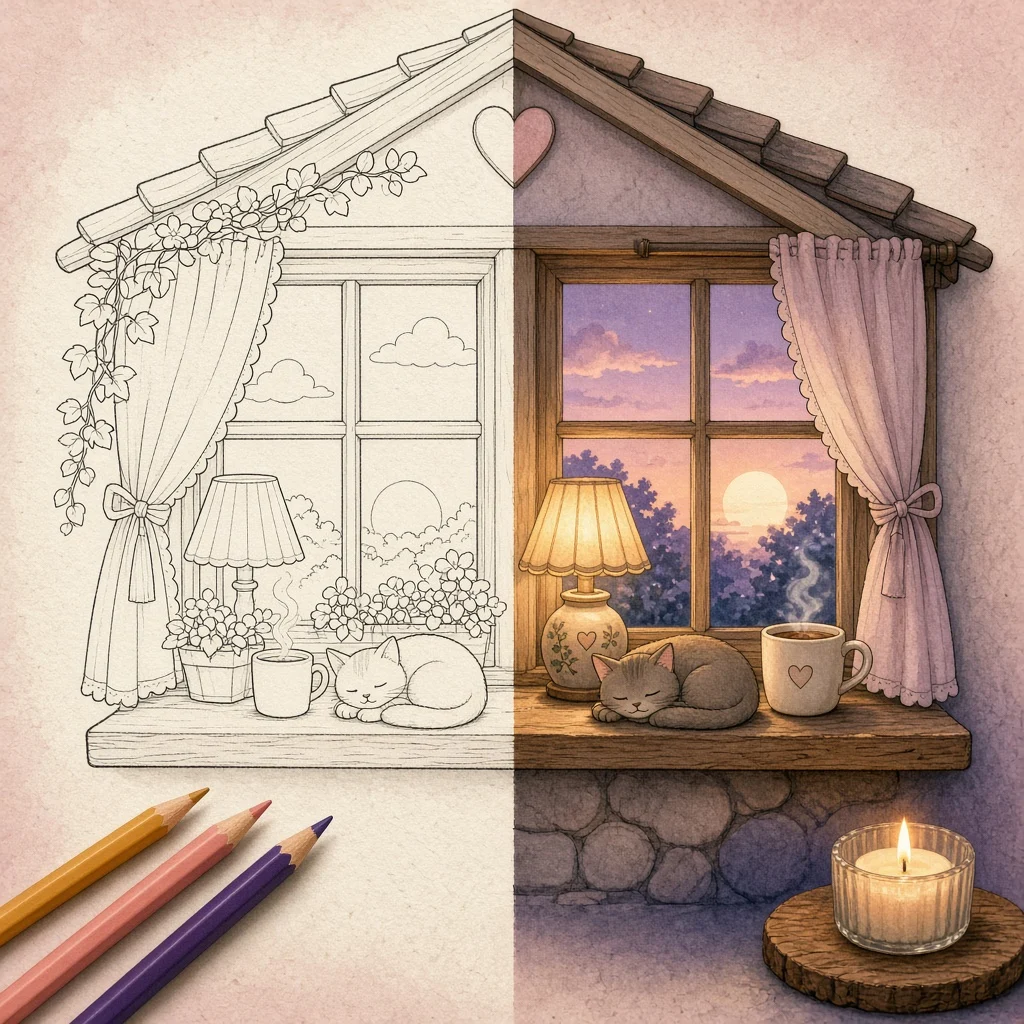
Flat color can look neat, but a little light and shade is what makes a page feel finished. Soft shadows tuck under a windowsill or mug, and gentle highlights catch on glass, lampshades and wood edges. You do not need advanced art training, just a few calm habits.
This guide covers practical soft shadows coloring tips for printable pages: how to pick a light source, where to place shadows, how to keep highlights clean, and how to practice on cozy indoor scenes.
Why Soft Shadows and Highlights Matter
Shadows and highlights give shapes weight and space. A tabletop looks flatter without a soft shadow under the dishes. A lamp looks brighter when the shade is a touch lighter on one side. Soft edges usually look better than hard black outlines of shade, especially on cute animal and cottage pages.
Keep the effect gentle. On coloring pages, the goal is depth you can notice at a glance, not a full painting. Light layers, one clear light direction, and a small palette will carry most scenes.
Pick One Light Source Before You Color
Decide where the light is coming from before you fill large areas. Common choices on cozy pages are a window on the left or right, a lamp in the corner, a candle on a table, or soft daylight from above.
- Window light. Light comes from the window side. Shadows fall on the opposite side of furniture, characters and props.
- Lamp or candle light. The brightest area sits near the light. Shadows stretch away from it, and far corners stay a little darker.
- Soft overhead light. Shadows sit under objects and in folds. Highlights stay mild on top edges.
Write a tiny arrow in the margin if that helps you remember. Once you choose a direction, stick with it for the whole page so everything feels consistent.
How to Color Soft Shadows
Soft shadows work best when you build them slowly instead of pressing hard with a dark pencil from the start.
Start with a mid-tone base
Color the object in its main color first, using light pressure. Leave the future highlight area a little lighter if you can. Then add a slightly darker version of the same color on the shadow side. Brown furniture can take a deeper brown; a cream mug can take a soft taupe; green leaves can take a cooler olive.
Keep shadow edges fuzzy
Blend the darker side into the mid-tone with light strokes so there is no sharp stripe. Circling motions or short strokes that follow the shape both work. If the shadow looks too strong, go over the mid-tone again instead of erasing hard.
Place contact shadows
Wherever an object sits on a surface, add a thin, soft shadow right under it. This is the quickest way to make mugs, books, toys and shoes look grounded. Keep that contact shadow darker than the rest of the shade, but still soft.
If a shadow turns muddy or you overshoot, our tips on how to fix coloring mistakes can help you rescue the page without starting over.
How to Add Gentle Highlights
Highlights are the places light hits first. On printable pages, leaving paper white or using a pale tint often looks cleaner than adding white gel pen later.
- Leave paper white on the brightest edge of glass, metal trims, wet noses or shiny buttons.
- Use a lighter tint of the local color on rounded shapes like cheeks, cushions and lampshades.
- Avoid outlining highlights with a hard white border. Soft transitions look more natural.
On wood, run a pale streak along one edge of a table or frame. On fabric, keep folds lighter on the top and a touch deeper in the crease. For glass panes, a pale vertical or diagonal skip of color can suggest reflection without lots of detail.
Layering lightly from the start makes these transitions easier. If you want a refresher, see colored pencil layering for beginners.
A Simple Cozy Palette for Light and Shade
You can practice soft shadows coloring with a short set of pencils:
- Warm light: cream, soft peach, pale yellow
- Mid tones: tan, soft rose, sage, sky blue
- Shadow tones: taupe, cocoa, dusty purple, soft gray
- Accent dark: one deeper brown or navy for tiny contact shadows only
Warm light pairs well with cooler shadows. A peach lamp glow looks richer when the far corner holds a little dusty purple or gray instead of more orange. You do not need many colors; repeating the same shadow tone across the page ties the scene together.
Practice on Cozy Indoor Scenes
Indoor pages are ideal practice because lamps, windows, shelves and soft props give you clear places for light and shade.
- Cozy Rainy Cafe Windows for window light, glass reflections and soft outdoor gloom
- Cozy Ramen Shop at Night for warm interior glow against a darker evening
- Cozy Attic Treasures for boxes, frames and lamp-lit corners
- Fennec Wind Chime Cottage for cottage windows, hanging details and soft outdoor light
- Mongoose Cozy Toy Clinic for shelves, tools and small props that need contact shadows
- Zorilla Picture Frame Shop for frames, wood edges and highlight practice
Browse more quiet evening pages in the Mindfulness category, cottage and creature scenes in the Animals category, and leafy outdoor light in the Nature category.
Backgrounds matter here too. A softly shaded wall or evening sky helps the bright lamp or window pop. For more ideas, see how to color backgrounds on coloring pages.
A Quick Practice Routine
Try this short drill on any page: mark the light source, color large shapes lightly, deepen the shadow sides, add thin contact shadows, then leave the brightest edges pale. Stop while the page still looks gentle. Overworking shadows is the main way cozy scenes turn heavy.
tintlet PDFs are for personal or family use, so print an extra practice page whenever you want a second try. For clean A4 prints, see how to print PDF coloring books at home.
FAQ
What is the easiest way to start soft shadows coloring?
Choose one light direction, color the object lightly, then add a slightly darker version of the same color on the shadow side. Finish with a thin soft shadow under the object where it meets the table or floor.
Should I use black for shadows on coloring pages?
Usually no. Black can look harsh on cute or cozy pages. A deeper version of the object color, or a soft gray, taupe or dusty purple, keeps shade looking natural.
How do I keep highlights from looking chalky?
Leave the brightest spots as plain paper when you can, or use a very pale tint of the local color. Soften the edge into the mid-tone so the highlight does not look like a white sticker.
Which pages are good for practicing light and shade?
Indoor scenes with windows, lamps, shelves and small props are ideal. Cafe windows, night shops, attics and cottage rooms give you clear places for glow and soft shade.
Bring Soft Light to Your Next Page
Pick one cozy indoor page, choose a single light source, and try these soft shadows coloring steps on just a few objects first. When you want fresh printable scenes for practice, browse the full tintlet coloring book collection and choose a book with windows, lamps or quiet corners you will enjoy shading.