
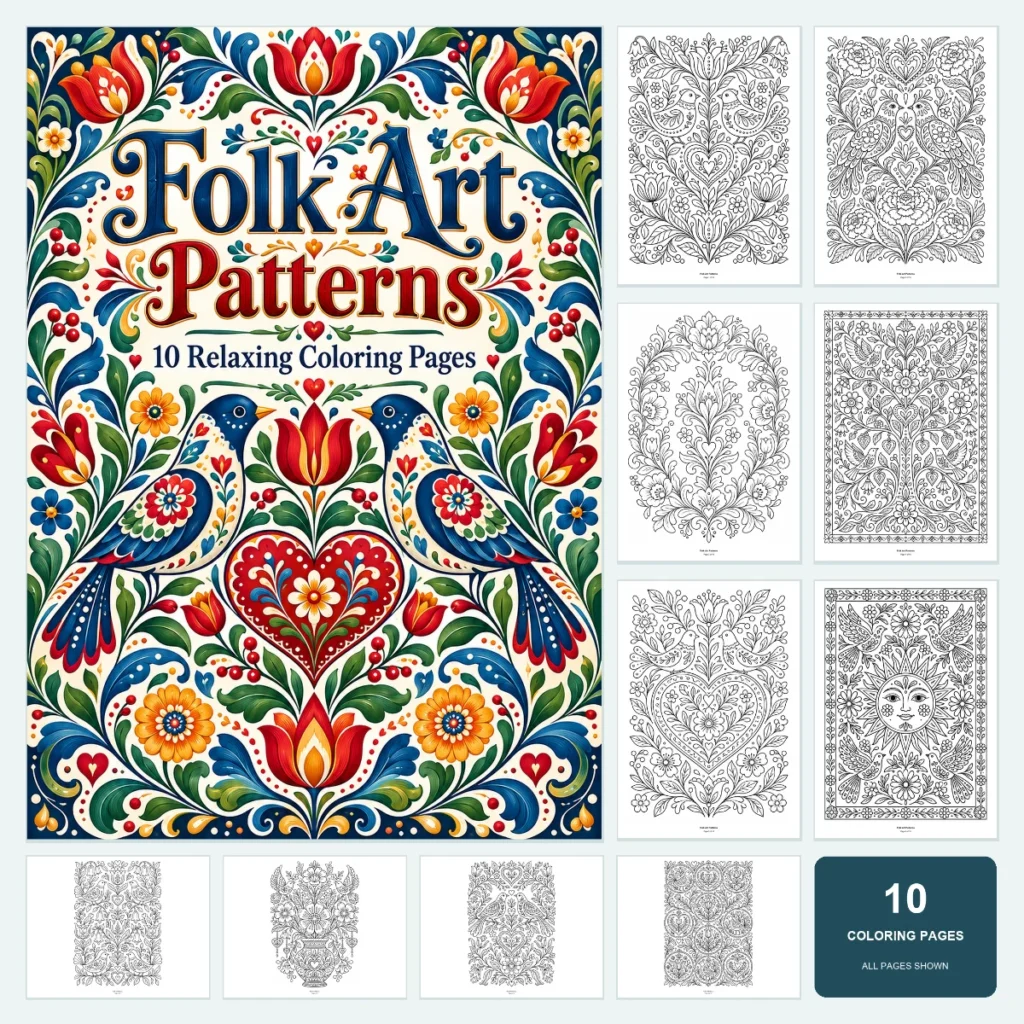
Some days a few bold shapes are exactly what you want. On others, a page full of little flowers, shelves, or decorative patterns feels inviting. Neither kind is a better choice in general. The useful question is which picture suits the session you want today.
Look at the size of the spaces
Before choosing a theme, look at the smallest enclosed shapes. Large spaces give you room to practice smooth coverage, broad color changes, or simple shading. Tiny spaces invite careful pencil work and can create a satisfying patchwork of detail.
View the page close to its intended print size. A design that looks open as a thumbnail can contain very small marks when you examine its windows, leaves, or decorations.
Check how busy the background is
A large character does not always mean a simple page. Shelves, plants, brickwork, or patterned wallpaper may fill most of the surrounding area. If you want a lighter project, choose a picture with some open background or decide in advance to leave that background white.
For a more absorbing project, look for several small areas you can explore independently. A decorative border or a group of related motifs can offer natural places to pause.
Match the page to your supplies
Fine details are easier to approach when you can make a controlled mark. Sharpened pencils can help with small corners, while a broader pencil stroke can cover open areas comfortably. Test your intended tools on the paper before committing to a complicated background.
You do not need a different set of supplies for every design. Choosing a page with spaces that suit the tools already in your pencil case can make the session feel more straightforward.
Choose a stopping point instead of a deadline
If you have a short window, plan to finish one flower cluster, one character, or a single shelf. A detailed page can become several small sessions. An open page can also take time if you decide to explore shading or textured marks.
Try judging your progress by the part you enjoyed working on, rather than by how much blank paper remains.
Keep two different projects ready
One simple page and one detailed page give you an easy choice without searching through your whole folder. Keep a swatch note with each so you can return to its colors later. You can switch between them whenever your attention or available time changes.
Compare open everyday designs such as Bold and Easy for Adults with the decorative motifs in Folk Art Patterns. Browse the Tintlet collection and choose the page whose shapes make you want to begin.